
-
Process pain points
The elasticity of the fabric varies greatly, making it difficult to control the shrinkage of the loose fabric; Multiple colors and sizes, frequent product changes, frequent switching between single item and batch streams. There are many subdivision techniques such as collars, cuffs, zippers, and contrasting lines, and the traditional "zone packing" approach can easily cause a buildup of work in progress and an imbalance in rhythm. The temperature window for the back ironing process is narrow, and local three-dimensional shapes (such as brim and elastic waistband) require high positioning accuracy and steam uniformity.
-
planning approach
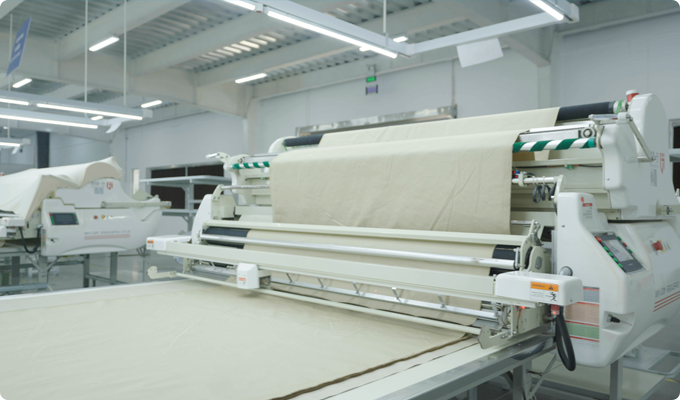
With "elastic fabric cushioning+single piece flow mainline+modular positioning" as the core: adding static buffering and humidity balance in the loose fabric area; After cutting, the cut pieces are directly hung to reduce creases during transportation; The sewing section adopts an intelligent sewing unit that can quickly switch between needle pitch and stitch; The rear three-dimensional ironing and tunnel style ironing are parallel, taking into account both flat and three-dimensional components.
Core equipment configuration
-
01
frontend
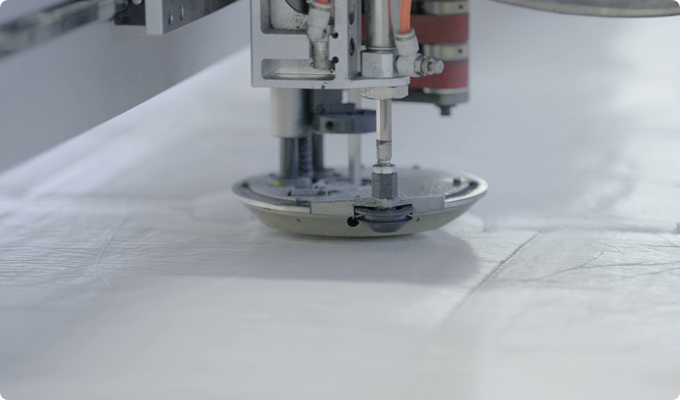
Wide width carding machine+edge laying machine+computerized cutting machine, equipped with static elimination and tension adaptive module.
-
02
main storyline
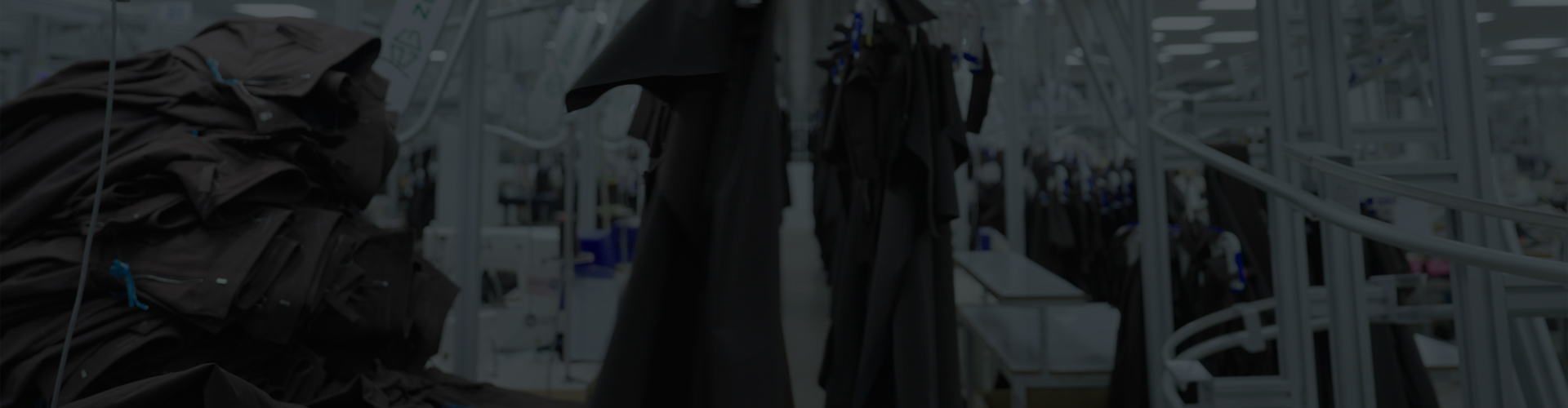
The high tempo hanging system (supporting segmented reflux and online caching) integrates MES workstation screens.
-
03
Sewing module
Multi needle distance flat sewing, four thread overlock sewing, waist pulling machine, automatic bag opening machine, all connected to hanging rhythm signal.
-
04
back-end
Three dimensional ironing machine+steam recovery system; Adjustable tunnel style ironing line, compatible with three-dimensional molds for pants and tops.
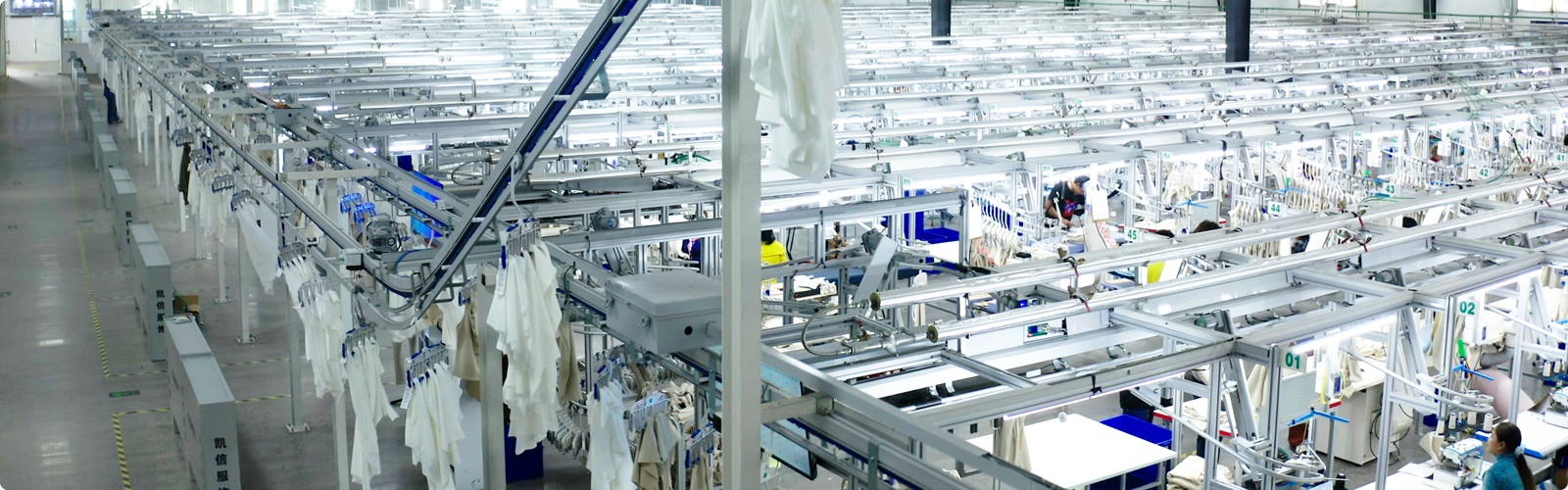
Layout key points
Loosen the fabric → let it stand → lay it out → cut it into pieces for the supermarket → hang the pieces online, with a "U" - shaped flow pattern to reduce crossing; Three dimensional ironing and flat ironing are arranged in separate zones, and the main steam pipeline is buried underground to avoid disorderly ground pipe networks; The finished products are temporarily stored near the shipping platform, with a fast track leading directly to the packaging area.