

-
Process pain points
The styles change quickly and there are many decorative techniques (such as ruffles, pleats, embroidery and splicing), making traditional assembly line style changes time-consuming. The fabric is lightweight and prone to wrinkling, and secondary creases are easily generated during transportation and storage. Frequent small-scale order flipping requires frequent switching of process paths and templates.
-
planning approach
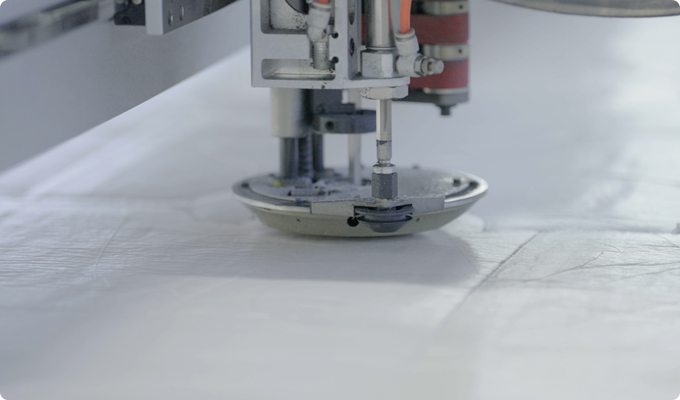
Flexible component line+aerial storage+quick mold change "mode: set decorative components such as ruffles and pleats as independent hanging loops, and only combine the main line; Cut the pieces directly into the air buffer, reducing ground handling; Templates and fixtures are managed through quick disassembly and coding, and the system automatically calls them when changing models.
Core equipment configuration
-
01
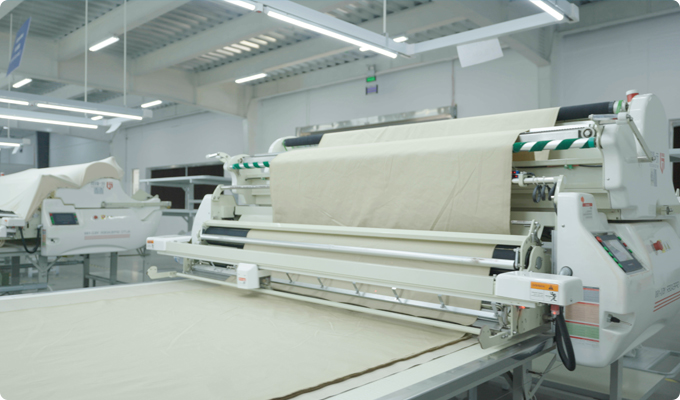
Loosening machine+low tension laying machine
Lightweight fabric without tension feeding
-
02
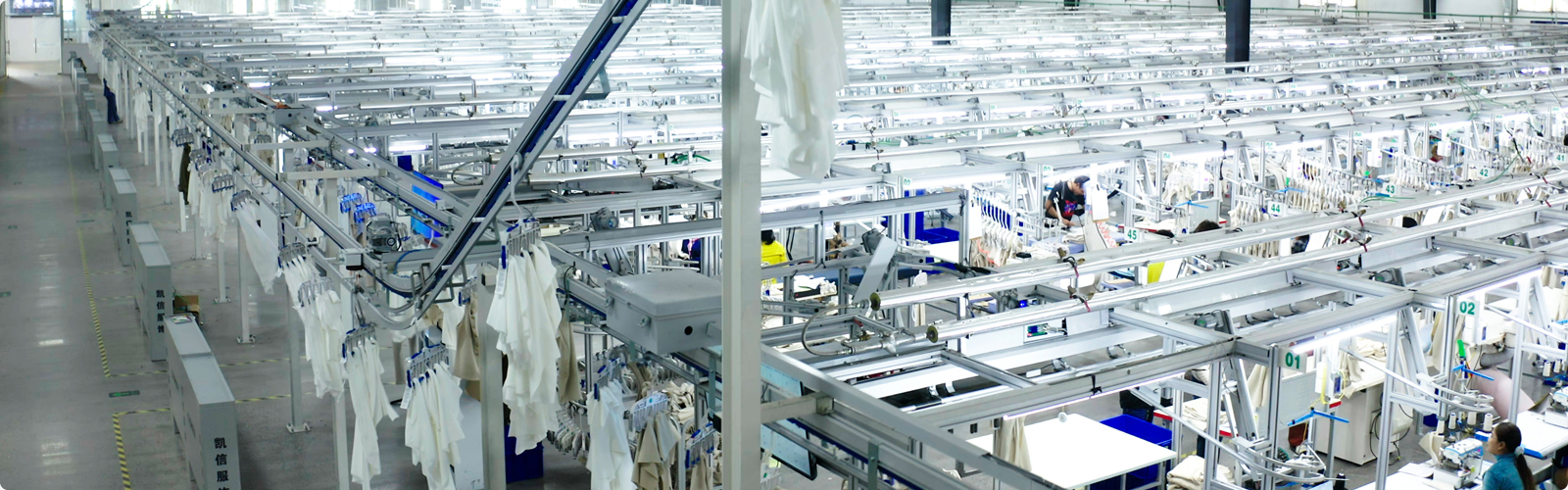
Tuokayma High Line Hanging
15 second replacement memory, automatically calling the new process path
-
03
Universal template sewing island
Quickly switch between straight lines, arcs, and savings using the same set of templates
-
04
Embroidery/Printing Island
Hanging Main Line "; Bridge "; Automatically send in and out according to the work order
-
05
Visual Inspection Station
Take photos of key parts for comparison, automatically mark for repair
Layout key points
Embroidery/Printing Island and Main Line; U" Form connections to avoid cross logistics
The visual inspection station is located near the final inspection area to reduce secondary handling
Replace the cache rack with a stock of at least 2 hours to ensure uninterrupted mainline operation