
-
Process pain points
There are various specifications for the length and waist circumference of the pants legs, as well as complex accessories such as zippers, pants loops, and contrasting ribbons, which can easily lead to missing processes. The traditional process of "leg flipping → ironing → re flipping" is long, labor-intensive, and prone to creasing. The positioning requirements for the "straight seam line and hip circumference curve" in the back ironing process are high, and the consistency of manual operation based on experience is poor.
-
planning approach
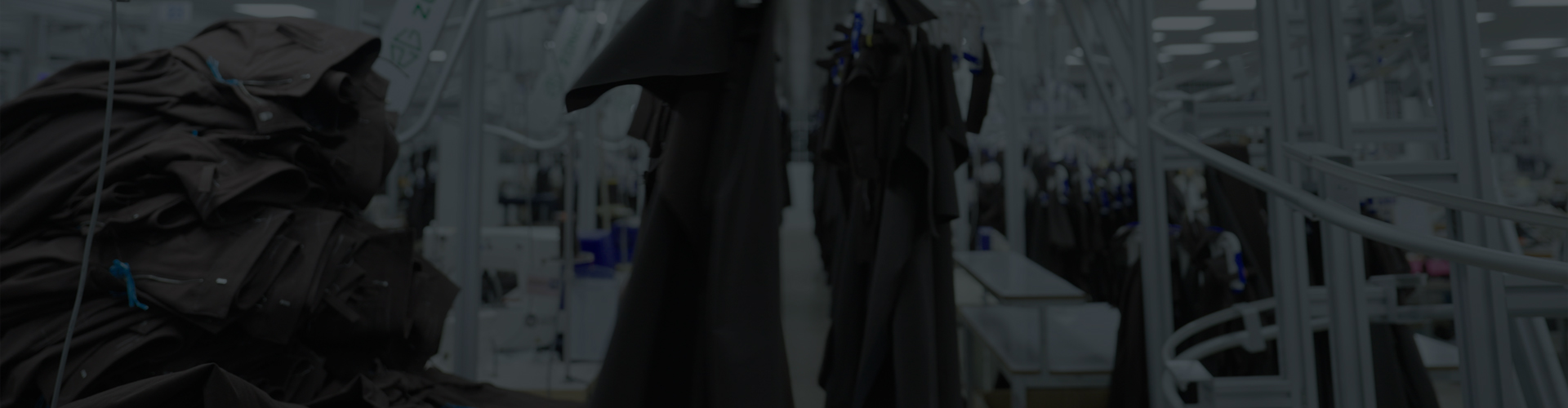
The solution of "non flipping flow of pants legs+three-dimensional positioning ironing": the pants legs are kept in a 3D hanging state inside the hanger, and side seams and overlock seams are directly performed; Modular fixtures are used for processes such as back pockets and zippers, with automatic scheduling of hanging cycles; The whole ironing section adopts a movable three-dimensional mold to ensure consistent position of the stitching line.
Core equipment configuration
-
01
frontend
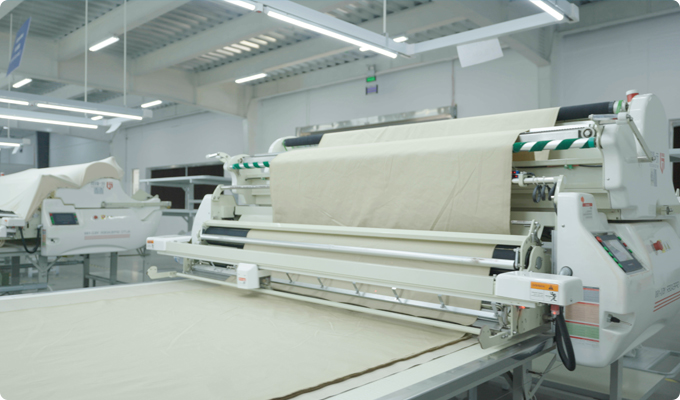
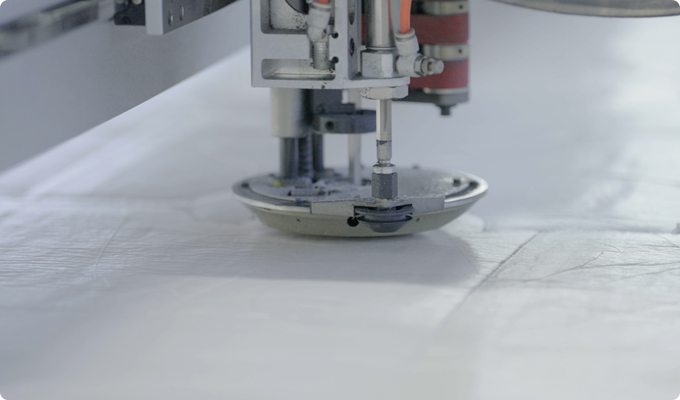
Wide width loose fabric+opposite edge laying+computer cutting machine, with "automatic alignment of stripes" module.
-
02
main storyline
Special 3D hanging sling for pants legs, supporting one-time completion of side seams, overlock seams, and waistband.
-
03
module unit
Automatic installation of zippers, automatic fastening of pants loops, and automatic knotting, all connected to the hanging rhythm.
-
04
back-end
3D leg ironing machine+tunnel style final ironing, steam recovery+automatic mold temperature control.
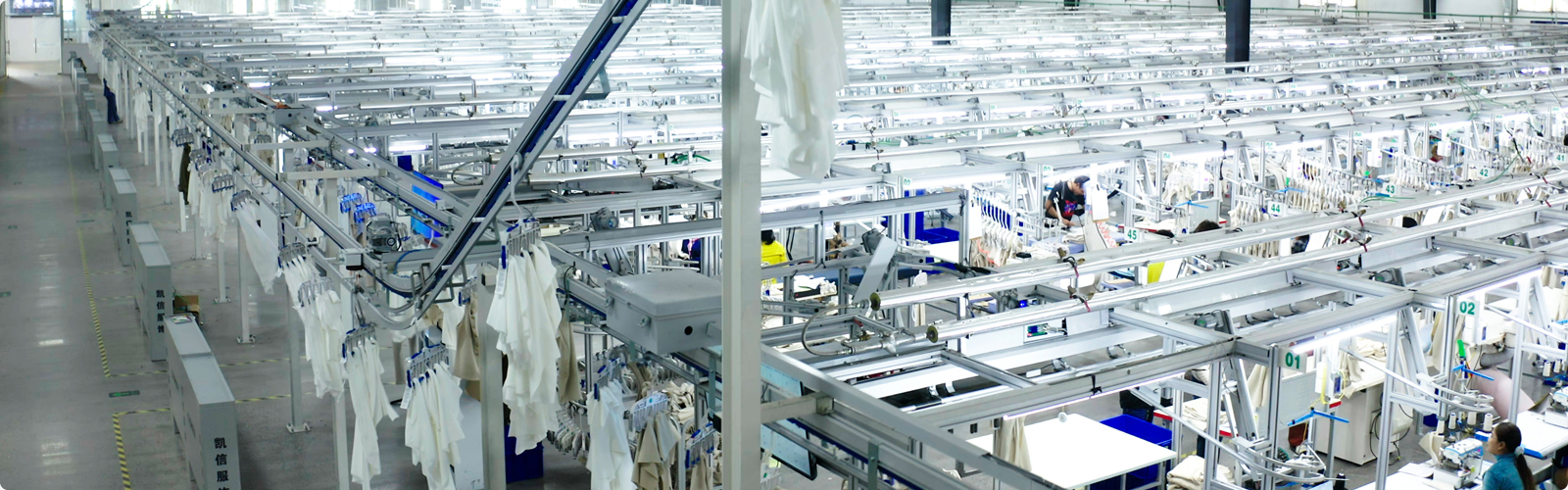
Layout key points
The main line of the pants legs runs parallel to the prefabricated branch line at the waist, and the end of the branch line is connected to the main line through an "air convergence"; The three-dimensional ironing machine is arranged in front of the tunnel entrance to reduce multiple handling; The finished product adopts the "hanging cache+automatic bagging" method and directly enters the packaging area.